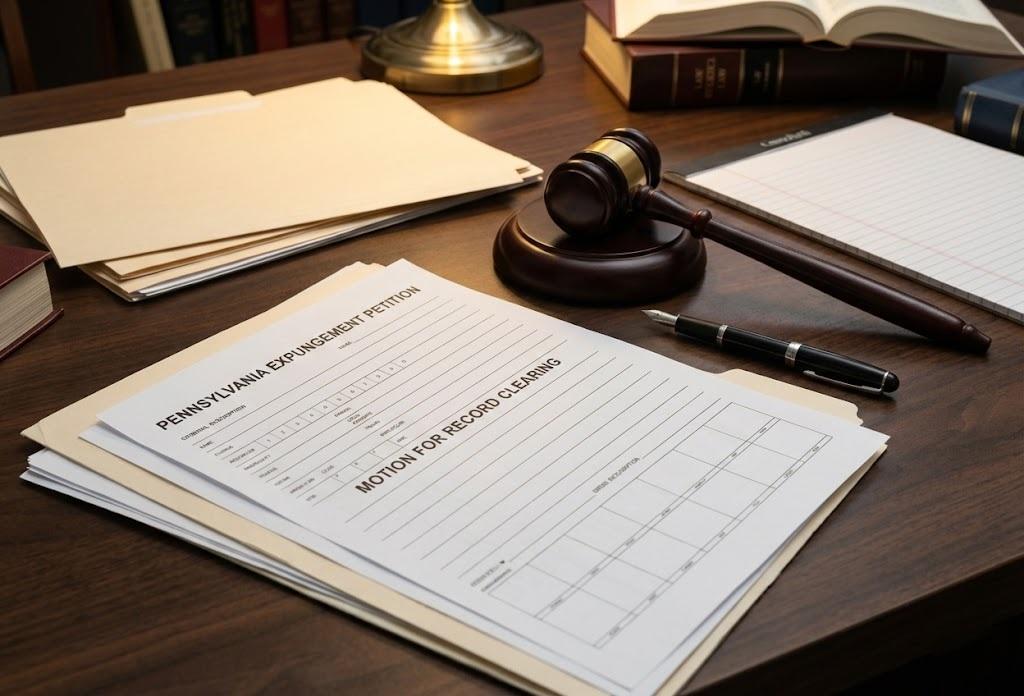
A criminal record doesn’t disappear when a case is closed, it follows you. It shows up on background checks when you apply for a job, rent an apartment, or apply to school. And in many cases, it stays visible even if you were never convicted.
Pennsylvania law gives you a path to change that. Through the expungement process, certain criminal records can be permanently erased, removed from background checks and public databases as if they never existed.
This guide explains what an expunged record is, who qualifies under Pennsylvania expungement law, and how the process works, so you can understand your options and decide on your next step with confidence.
Get Exclusive Legal Help Today!
Contact us now
What is an Expunged Record?
An expunged record is a criminal record that has been permanently erased from public and official databases. Once expunged, it no longer appears in background checks, employers and landlords generally cannot access it, and individuals are usually not required to disclose it. Unlike record sealing, which only hides the record from public view, expungement under Pennsylvania law provides the strongest legal relief by effectively removing the record as if it never existed.”
Understanding Pennsylvania Expungement Law
Pennsylvania expungement law provides a legal process for permanently removing certain criminal records from public access. It is primarily designed to help individuals whose cases did not result in convictions, as well as those with minor or older offenses.
Eligibility for expungement depends on several factors, including the outcome of the case, the type of offense, the time that has passed, and the individual’s age and criminal history. Not all cases qualify, so understanding these rules before filing is important to ensure the petition is considered by the court.
Who is Eligible for Expungement in Pennsylvania?
- Charges Dismissed, Withdrawn, or Not Guilty: People whose cases did not result in a conviction are generally eligible to request expungement. This allows them to remove the record from public access.
- Summary Offenses: Minor offenses may qualify for expungement after five years, as long as the individual has remained arrest-free during that period.
- Individuals Age 70 or Older: Residents who are 70 years or older and have not been arrested for at least ten years may be eligible for expungement.
- Deceased Individuals: In certain circumstances, family members can petition the court to expunge the criminal record of a deceased person.
- Limitations: Most misdemeanor and felony convictions do not qualify for expungement. However, some may still be eligible for limited record sealing under Pennsylvania’s Clean Slate Act, which restricts public access to the record rather than fully erasing it.
How Do You Expunge a Criminal Record in Pennsylvania?
Understanding the steps can make the process smoother and easier to follow. Here’s a clear, step-by-step guide:
Step 1: Check Eligibility
The first step is to carefully review your criminal history to see if your case qualifies for expungement. Courts look at factors such as the outcome of the case, the type of offense, how much time has passed, and your overall criminal record. Keep in mind that serious felonies and recent offenses usually do not qualify.
Step 2: Gather Your Documents
- Collect all important paperwork, like court orders, case numbers, and proof of dismissal or acquittal.
- Include documents showing you meet eligibility rules, such as age for seniors or time since a minor offense.
- Organized paperwork helps avoid delays.
Step 3: File the Expungement Petition
- Submit a formal petition to the court where your case was handled.
- Include your case details, reason for expungement, and supporting documents.
- Filing accurately is important, mistakes can delay or deny your petition. This is often the stage where legal assistance may be beneficial to ensure:
- The correct statutory grounds are cited
- All supporting documentation is included
- Multiple dockets are handled properly
- Any potential objections are addressed in advance
Not sure if your record qualifies? Eligibility depends on the type of offense, case outcome, and how much time has passed, and the rules can be complex. The McGarrigle Law Firm offers confidential one-on-one consultations to review your case and give you a clear answer.
Schedule your free consultation
Step 4: Notify the Authorities
- The petition must be served to:
- The District Attorney’s Office
- Relevant law enforcement agencies
- This lets them review your petition and respond if needed.
Step 5: Court Review or Hearing
- The court reviews your petition.
- Some cases are approved without a hearing.
- If objections arise, a court hearing may be scheduled, and you may need to explain your eligibility.
Step 6: Court Decision and Record Removal
- If approved, the court orders all agencies to permanently delete the record.
- The expunged record is removed from public access, background checks, and most official databases.
Step 7: Verify Expungement
- Check that all agencies have removed the record.
- Make sure it no longer appears on public background checks or online databases.
Step 8: Important Legal Considerations After Expungement
- Expunged records usually don’t need to be disclosed to employers, landlords, or schools.
- Some access may remain for law enforcement or government agencies.
- Hiring an experienced expungement lawyer can reduce mistakes, avoid delays, and make the process easier.
How White Collar Crime Conviction Affects Your Life
Filing for expungement on your own is technically possible but a single mistake can get your petition denied or delayed by months. Courts expect precise paperwork, correct statutory citations, and proper service to all required agencies. There’s little room for error.
An experienced expungement attorney can tell you upfront whether your case qualifies, handle all filings and documentation, anticipate objections from the prosecutor, and make sure nothing falls through the cracks. For most people, the cost of legal help is far outweighed by avoiding a denial or the months lost waiting on a fixable mistake.
If you’re weighing whether to hire a lawyer, the most practical first step is a consultation. You’ll get a direct answer about your eligibility and what the process would look like for your specific case before committing to anything.
For those looking to learn more about expungement in Pennsylvania, the McGarrigle Law Firm provides confidential, one-on-one consultations to evaluate eligibility and discuss the most appropriate legal options.
Talk To An Expungement Lawyer
How Long Does Expungement Take?
The time it takes to complete an expungement in Pennsylvania can vary depending on several factors. These include the county where the case is filed, the court’s workload, and whether a hearing is required.
In many cases, simple expungements, including dismissed charges or cases with no objections, may take about 2 to 4 months. More complex cases, especially those that involve a court hearing or objections from the prosecutor, can take 4 to 6 months or longer.
Delays may happen if paperwork is incomplete, filing rules are not followed, or additional review is needed by the court or law enforcement agencies. Knowing these general timelines can help individuals set realistic expectations and better prepare for the expungement process in Pennsylvania.
Expungement vs. Record Sealing
| Feature |
Expungement |
Record Sealing |
| Definition |
Permanently removes the criminal record |
Hides the record from public view |
| Public Access |
Not visible to employers, landlords, or background checks |
Not visible to the public, but still exists |
| Law Enforcement Access |
Generally removed, with limited internal access |
Still visible to law enforcement and courts |
| Legal Impact |
Strongest form of legal relief available |
Provides limited legal relief |
| Eligibility |
Limited and specific eligibility requirements |
Broader eligibility under Pennsylvania’s Clean Slate Act |
| Record Status |
Treated as if the record never existed |
Record remains but access is restricted |
| Note |
Best option for complete record removal, but fewer people qualify |
Helpful when expungement is not available and public access needs to be restricted |
How McGarrigle Law Firm Can Help
Filing for expungement on your own is technically possible but a single mistake can get your petition denied or delayed by months. Courts expect precise paperwork, correct statutory citations, and proper service to all required agencies. There’s little room for error.
An experienced expungement attorney can tell you upfront whether your case qualifies, handle all filings and documentation, anticipate objections from the prosecutor, and make sure nothing falls through the cracks. For most people, the cost of legal help is far outweighed by avoiding a denial or the months lost waiting on a fixable mistake.
If you’re weighing whether to hire a lawyer, the most practical first step is a consultation. You’ll get a direct answer about your eligibility and what the process would look like for your specific case before committing to anything.
Contact McGarrigle Law Firm
Final Thoughts
A criminal record can quietly limit your opportunities for years affecting jobs, housing, and more. But for many Pennsylvanians, expungement offers a real, legal path to move forward without that weight.
If your case was dismissed, you were acquitted, or you have a minor offense from years ago, there’s a good chance you may qualify. The sooner you find out, the sooner you can take action.
The McGarrigle Law Firm offers free, confidential consultations to help you understand whether expungement is an option for you. There’s no obligation, just a direct conversation about your situation and what’s possible.
Schedule your free consultation today